Introversion is a fundamental personality trait where individuals draw energy from their inner world of thoughts, reflection, and solitude rather than from external social stimulation. Coined and popularized by Swiss psychiatrist Carl Jung in the 1920s, introversion exists on a spectrum opposite to extroversion. Most people are ambiverts, displaying traits of both.
Introverts are not necessarily shy or antisocial—they simply prefer quieter, less stimulating environments and recharge through alone time. Approximately 25-40% of the population identifies as introverted.

What is Introversion?
According to Jung, introverts orient their energy inward, focusing on subjective psychic contents and internal experiences. Modern psychology, including the Big Five personality traits, views introversion as low extroversion: a preference for subdued activities, deep thinking, and meaningful one-on-one interactions over large gatherings or small talk.
Introverts often feel drained after prolonged social events and need solitude to restore their energy. They process information through longer, more complex neural pathways and are more sensitive to dopamine, the reward neurotransmitter.
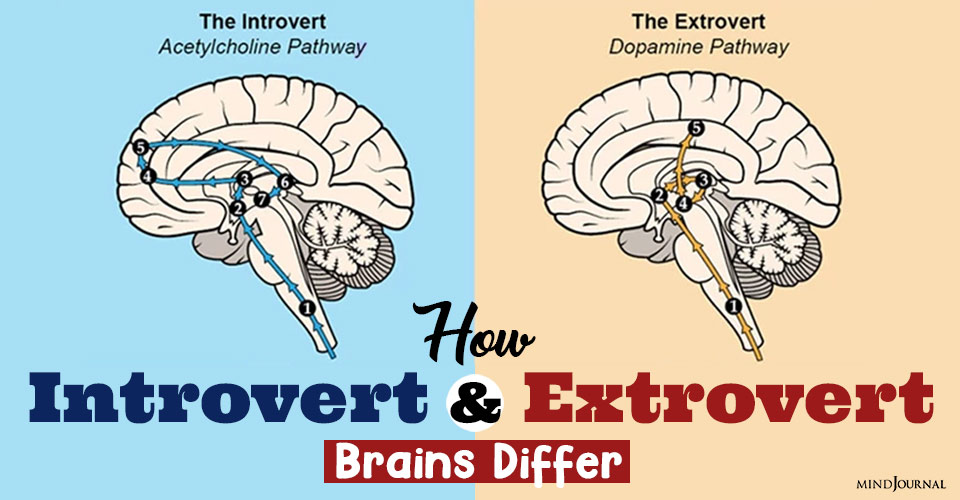
How Introvert And Extrovert Brains Differ: 6 Differences According To Science
Key Characteristics of Introverts
- Energized by Solitude: Introverts recharge alone through reading, writing, or quiet reflection.
- Deep Thinkers: They think before speaking, prefer meaningful conversations, and excel at listening.
- Small Social Circles: They maintain a few close, loyal friendships rather than broad networks.
- Preference for Calm Environments: Overstimulation from crowds or noise quickly tires them.
- Observant and Reflective: They observe situations first and act deliberately.
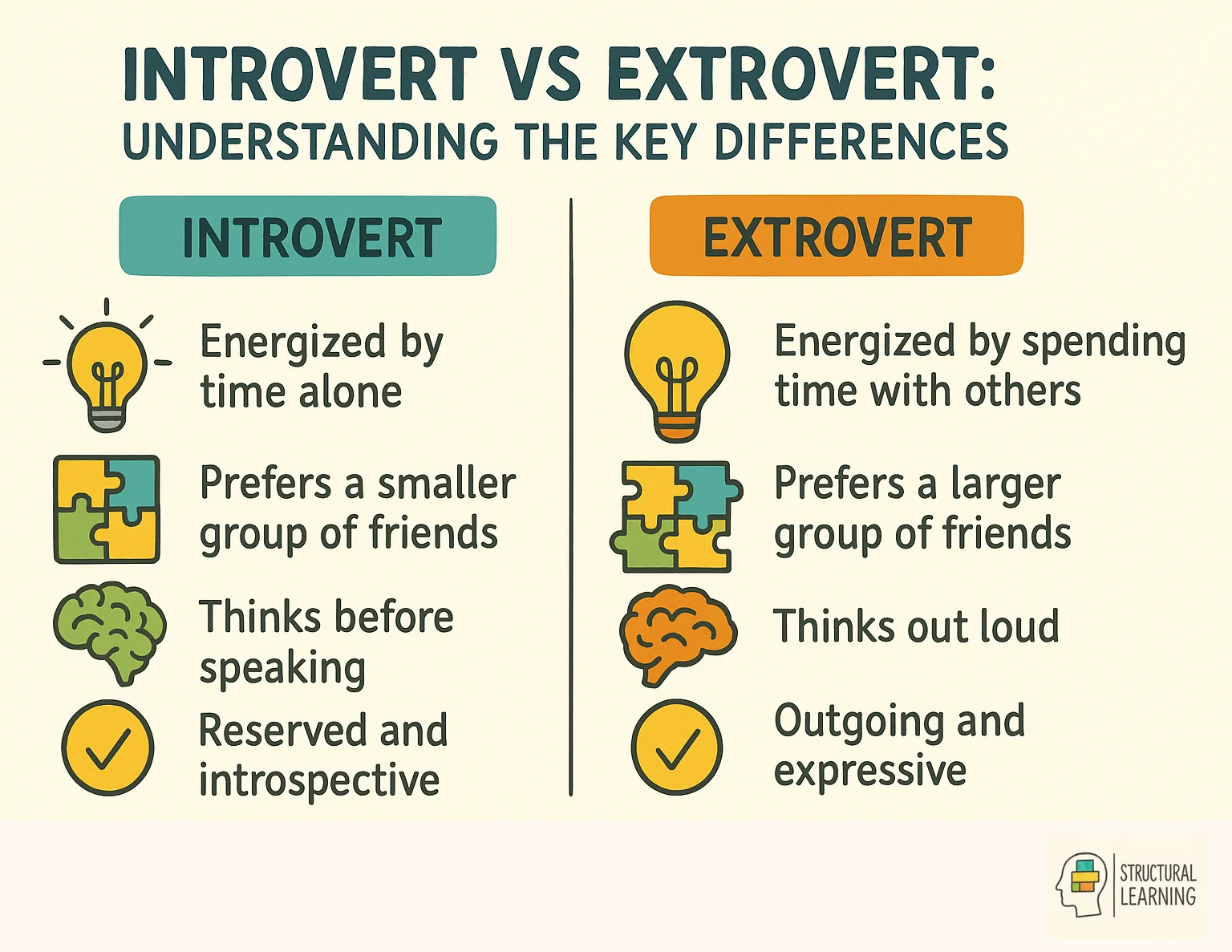
Introvert vs Extrovert: How Personality Affects Learning
Introversion vs. Extroversion
Introverts and extroverts differ fundamentally in energy sources and brain wiring:
| Aspect | Introverts | Extroverts |
|---|---|---|
| Energy Source | Solitude and internal reflection | Social interaction and external stimuli |
| Social Preference | Small groups, deep talks | Large groups, networking |
| Thinking Style | Think before speaking | Think out loud |
| Response to Stimulation | Overwhelmed by high energy | Thrives on excitement |
Introverts’ brains follow a longer acetylcholine pathway for calm focus, while extroverts use dopamine pathways for reward-seeking.
Managing Introverts vs. Extroverts + Infographic
Common Myths and Facts
Myth: Introverts are shy or dislike people. Fact: Shyness involves social fear; introversion is about energy management. Many introverts enjoy people in moderation and form strong bonds.
Myth: Introverts cannot be leaders. Fact: They often excel as thoughtful, empathetic leaders who listen well and strategize deeply.
Myth: Introversion is a weakness in extrovert-dominated societies. Fact: Introverts bring valuable strengths like creativity, focus, and independence.
Strengths and Benefits of Introversion
Introverts possess rich inner lives, exceptional concentration, and the ability to form profound relationships. They thrive in independent work, creative pursuits, and roles requiring careful analysis. Famous introverts include Albert Einstein, Bill Gates, and Mahatma Gandhi, who achieved greatness through quiet reflection and deep insight.
On World Introvert Day, a look at 5 famous introverts- The Week
In a fast-paced world, introverts remind us of the power of stillness, listening, and thoughtful contribution. Embracing introversion leads to greater self-awareness and balanced well-being for everyone on the spectrum.